Introduction
Young children often grip a crayon with a tight, full-fist grasp, pressing down so hard that paper tears and little hands tire within minutes. That exhausting struggle highlights a fundamental gap in foundational muscle strength before formal penmanship begins. Early childhood classrooms and occupational therapy clinics rely on targeted line tracing to bridge this gap, transforming loose scribbles into controlled, intentional strokes. Grounded in developmental best practices, the picnic line trace free printable worksheet transforms routine pre-writing exercises into an engaging seasonal adventure that invites young learners to guide ants, sandwiches, and baskets along dotted pathways. By anchoring motor skill acquisition in a familiar outdoor theme, adults can support essential hand-eye coordination without inducing frustration.
💡 Educational Key Takeaways:
- Core Skill: Structured Picnic Line Trace focused on developing pencil grip, stroke control, and early literacy/math confidence.
- Target Scope: Suited for homeschoolers, preschool, kindergarten, and elementary learners.
- Best Recommendation: Practice 10–15 minutes daily with ergonomic writing tools to reinforce muscle memory without hand fatigue.
What This Worksheet Covers
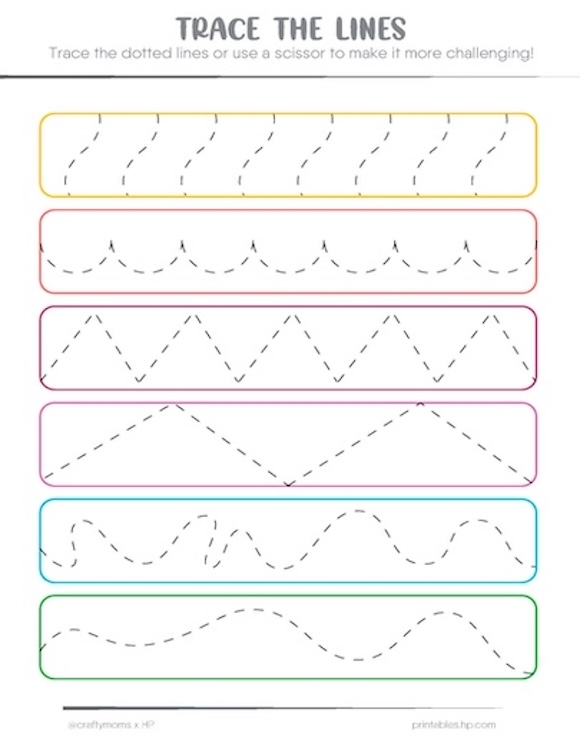
Structured progression remains the cornerstone of effective early childhood intervention. This resource features a variety of directional paths, including horizontal, vertical, diagonal, and wavy lines that mimic winding picnic trails. As children navigate these tracks, intrinsic hand muscles engage to stabilize the wrist and regulate pencil pressure. That’s exactly what this resource addresses, moving children beyond random doodling into systematic directional tracking. Tracing vertical lines prepares the brain for uppercase letters, while diagonal paths demand advanced visual-motor integration. Explorations within the Fine Motor and Pre-Writing Skills collection provide continuous reinforcement of these exact mechanics, ensuring smooth transitions into letter formation.
Key Learning Outcomes
Intentional stroke control yields measurable gains in functional classroom performance. According to the American Occupational Therapy Association, proficient fine motor control by kindergarten strongly correlates with academic success and classroom engagement. Children utilizing this printable refine their visual tracking, crossing the midline from left to right in alignment with reading readiness benchmarks. Finger dexterity improves as the pencil or crayon stays firmly on the dotted path. Furthermore, spatial awareness blossoms organically as learners estimate distance and adjust arm movements to reach the end of each trail. Exploring related activities found in the Shape and Line Tracing section solidifies these spatial concepts across diverse visual formats.
How to Use This Worksheet
Flexibility defines the best early learning tools. Adults can print the sheet on standard paper or slide it inside a heavy-duty plastic sleeve for dry-erase marker practice. Starting with a finger or a thick-tipped marker reduces early resistance among hesitant learners. Here’s what makes this worksheet different: the narrative element turns a static drill into a rescue mission where a hungry ant needs help finding a basket. Adults should encourage children to verbalize the direction of the movement, using descriptive terms like rolling hills or zigzag peaks. Pairing these exercises with materials from Tracing Worksheets creates a comprehensive, multi-sensory curriculum that keeps children motivated.
Practical Tips for Parents and Teachers
Posture and seating arrangement dictate the quality of fine motor output. Feet must rest flat on the floor, and the table height should align naturally with the child’s mid-chest level. Short, frequent sessions yield superior results compared to long, fatiguing drills. Breaking crayons or pencils into short, stubby pieces naturally encourages a functional tripod grasp by preventing fist-clenching. Guiding the child’s hand gently from underneath can also help establish proper muscle memory during initial attempts. Celebrating small victories builds lasting confidence, turning fine motor practice into a favorite daily routine.
Age-Appropriate Recommendations
Developmental readiness dictates how children interact with pre-writing sheets. In accordance with the National Association for the Education of Young Children guidelines on developmentally appropriate practice, two-year-olds benefit most from tracing thick, straight lines using thick paintbrushes or finger paint. Three and four-year-olds develop the wrist stability required for wavy and zigzag paths using chunky crayons. Kindergarteners and first-graders refine precision by executing complex diagonal loops with standard pencils. According to Reading Rockets, early visual-motor interventions significantly reduce letter reversals and spatial confusion in emergent writers.
Proficient fine motor control by kindergarten strongly correlates with academic success and classroom engagement — American Occupational Therapy Association
Frequently Asked Questions
Clear guidance helps educators and families maximize the benefits of printable learning materials.
Early visual-motor interventions significantly reduce letter reversals and spatial confusion in emergent writers — Reading Rockets
Explore More Free Printable Tracing Worksheets
Expanding a young learner’s repertoire requires fresh themes and progressive challenges. Accessing additional resources keeps engagement high throughout changing seasons and developmental milestones. Exploring the Seasonal and Fun Themes library offers holiday and weather-based tracing pages that maintain high interest levels. Combining these diverse materials ensures a well-rounded foundation for lifelong writing success.
Download a free picnic line trace worksheet to build pre-writing skills, pencil control, and fine motor dexterity in young children. Perfect for home and school.
💬 Frequently Asked Questions
Developmental Milestone & Activity Table
| Development Stage | Recommended Daily Duration | Primary Learning Objective |
|---|---|---|
| Preschool & Pre-K | 10 – 15 Minutes | Pencil grip development & basic pre-stroke lines |
| Kindergarten | 15 – 20 Minutes | Letter/number formation & spatial line awareness |
| Early Elementary (Grade 1–2) | 20 – 30 Minutes | Fluency, sentence construction & neatness |