Introduction
Watch a five-year-old attempt to write a capital letter ‘A’ or ‘Z’, and the underlying mechanics of hand control become immediately apparent. Pencil control requires intricate coordination between the eyes, hands, and core postural muscles. Years of observing kindergarten classrooms and occupational therapy clinics reveal a recurring hurdle: children frequently struggle with slanted lines. Horizontal and vertical strokes emerge relatively early, yet diagonal paths demand sophisticated visual-motor integration. That exact developmental gap is bridged through targeted practice using diagonal lines worksheets for kindergarten, a foundational resource designed to strengthen hand muscles before formal handwriting instruction begins.
💡 Educational Key Takeaways:
- Core Skill: Structured Diagonal Lines Worksheets For Kindergarte focused on developing pencil grip, stroke control, and early literacy/math confidence.
- Target Scope: Suited for homeschoolers, preschool, kindergarten, and elementary learners.
- Best Recommendation: Practice 10–15 minutes daily with ergonomic writing tools to reinforce muscle memory without hand fatigue.
What This Worksheet Covers
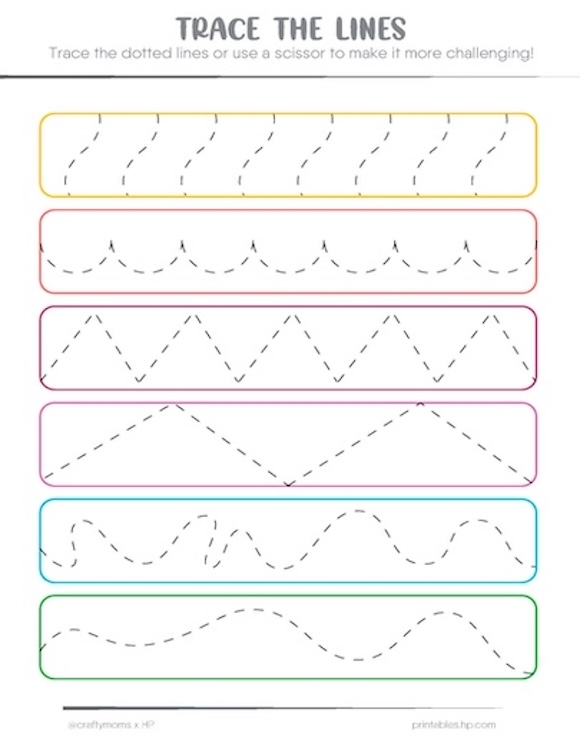
The printable resource features progressive directional paths that guide young learners from basic slants to intersecting angles. Children encounter sweeping left-to-right slants, descending right-to-left angles, and zig-zag formations mimicking mountain peaks. Each segment builds essential visual tracking skills necessary for reading and writing. According to the American Occupational Therapy Association (AOTA), mastery of pre-writing strokes—including horizontal, vertical, and diagonal lines—is a critical developmental prerequisite for letter and number formation. Mastering these strokes prevents early hand fatigue and promotes legible handwriting down the road.
Key Learning Outcomes
Targeted tracing practice refines pencil pressure regulation and bilateral coordination. Learners utilize resources from the Fine Motor and Pre-Writing Skills collection to isolate finger movements while stabilizing the wrist. Crossing the visual midline becomes second nature as children track slants across the page. Furthermore, executing controlled diagonal strokes reinforces spatial awareness, a cornerstone of early mathematical thinking and literacy development. Letter formation relies heavily on diagonal components found in characters like K, V, W, X, Y, and Z.
How to Use This Worksheet
Preparation requires minimal effort: simply download, print, and pair the pages with thick crayons, short pencils, or dry-erase markers inside protective sleeves. Adults should encourage a functional grasp, ensuring the thumb and index finger oppose each other correctly. Children trace from designated green starting dots to red stop signs, establishing consistent directional habits. Integrating these pages into daily learning centers pairs exceptionally well with tracing activities found in the Shape and Line Tracing category for comprehensive stroke development.
Practical Tips for Parents and Teachers
Desk height significantly impacts writing posture and hand control. Feet must rest flat on the floor, and the non-dominant hand should anchor the paper firmly. Shortening writing tools naturally encourages a mature tripod grasp by discouraging awkward fist grips. Integrating sensory elements—such as tracing textured lines with fingers prior to pencil use—enhances neurological mapping. Adults can extend learning by having children air-write giant diagonal strokes before putting markers to paper.
Age-Appropriate Recommendations
According to developmental milestones outlined by the Centers for Disease Control and Prevention (CDC), typical four- to five-year-olds begin copying crosses and basic intersecting strokes. This specific resource aligns directly with the Common Core ELA standard CCSS.ELA-LITERACY.L.K.1.A, which emphasizes printing all upper- and lowercase letters—many of which rely on mastery of diagonal components. Educators utilizing Developmentally Appropriate Practice (DAP) frameworks recognize that scaffolded stroke practice ensures children transition smoothly from gross motor arm movements to refined distal finger control without unnecessary frustration.
According to the American Occupational Therapy Association (AOTA), fine motor proficiency and pre-writing stroke mastery by kindergarten age directly correlate with academic success and reduced hand fatigue during prolonged writing tasks. — AOTA Practice Framework
Frequently Asked Questions
Caregivers often wonder about the best approach to introducing slants. Clear answers to common implementation inquiries appear below to support early learning at home and in school.
Explore More Free Printable Tracing Worksheets
Expanding a child’s fine motor repertoire requires diverse, engaging practice materials. Educators and parents can discover additional resources across related categories, including Alphabet and Number Tracing for letter formation or thematic options within Seasonal and Fun Themes to maintain high engagement throughout the academic year.
Free printable diagonal lines worksheets for kindergarten designed by an occupational therapist to build pre-writing skills, pencil control, and fine motor strength.
💬 Frequently Asked Questions
Developmental Milestone & Activity Table
| Development Stage | Recommended Daily Duration | Primary Learning Objective |
|---|---|---|
| Preschool & Pre-K | 10 – 15 Minutes | Pencil grip development & basic pre-stroke lines |
| Kindergarten | 15 – 20 Minutes | Letter/number formation & spatial line awareness |
| Early Elementary (Grade 1–2) | 20 – 30 Minutes | Fluency, sentence construction & neatness |