Introduction
Pencils hover clumsily above blank pages while small fingers wrap entirely around crayons in awkward, fisted grips. Every educator and therapist recognizes this classic developmental stage, observing firsthand how young children struggle to control writing implements. Translating visual intentions into smooth hand movements requires immense neurological and physical coordination that develops over several years. That is exactly where targeted pre-writing practice steps in to bridge the gap between messy scribbles and controlled letter formation. Children need engaging, thematic pathways to build hand strength before tackling formal handwriting curricula. Utilizing playful resources like the tracing of a boat for toddlers turns foundational pencil control into an exciting maritime adventure instead of a frustrating chore.
💡 Educational Key Takeaways:
- Core Skill: Structured Tracing Of A Boat For Toddlers focused on developing pencil grip, stroke control, and early literacy/math confidence.
- Target Scope: Suited for homeschoolers, preschool, kindergarten, and elementary learners.
- Best Recommendation: Practice 10–15 minutes daily with ergonomic writing tools to reinforce muscle memory without hand fatigue.
What This Worksheet Covers
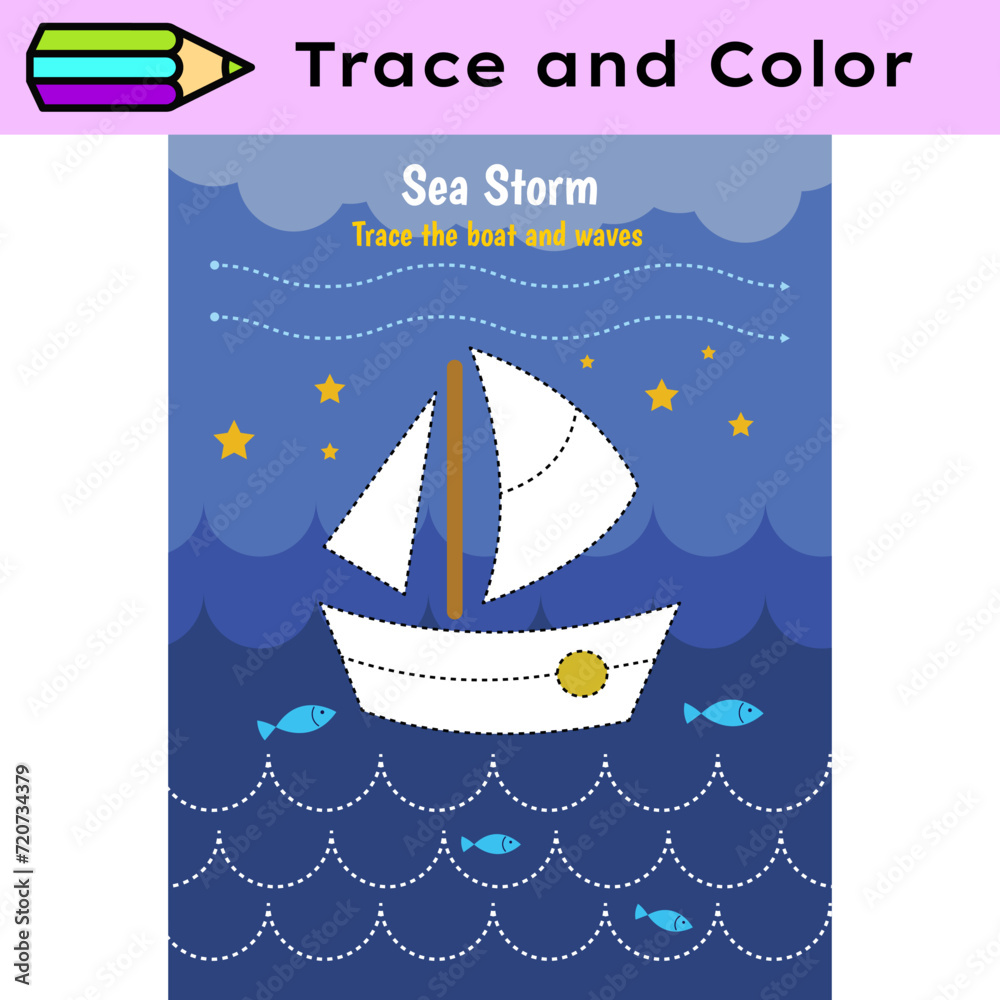
Maritime themes instantly captivate young imaginations, making nautical sheets a favorite in both preschool classrooms and home learning spaces. This specific printout features a charming boat graphic paired with bold, directional tracing lines that guide early learners across the page. Horizontal strokes, gentle waves, and upward slants mimic the essential strokes required for future alphabet and number formation. According to Reading Rockets, early exposure to structured line tracking significantly enhances visual-motor integration, which directly supports subsequent reading and writing fluency. Beyond simple line repetition, the layout encourages children to follow a distinct path from left to right. Building consistent left-to-right scanning habits prepares the visual cortex for tracking text during early reading instruction.
Key Learning Outcomes
Mastering these foundational exercises yields remarkable improvements in foundational motor control. Hand-eye coordination improves substantially as little eyes track the pencil tip while guiding it along the designated track. Additionally, children refine their bilateral coordination by holding the paper steady with one hand while drawing with the dominant hand. Muscle memory forms rapidly through repeated engagement with curved and straight vector lines. According to the American Occupational Therapy Association, developing intrinsic hand strength during the toddler years prevents long-term writing fatigue and poor pencil grasps. Integrating these specific mechanics lays a robust groundwork for advanced Fine Motor and Pre-Writing Skills across all educational settings.
How to Use This Worksheet
Preparation determines success when introducing printable materials to very young children. Laminating the sheet or slipping it inside a heavy-duty plastic sleeve allows toddlers to use dry-erase markers repeatedly without tearing the paper. That flexibility encourages risk-taking, since accidental slips get wiped away instantly with a quick swipe of a cloth. Adults should demonstrate the tracing motion first, modeling slow, deliberate hand movements while verbalizing the path. Describing the action out loud helps children connect auditory cues with physical execution. Pairing these visual prompts with broader Seasonal and Fun Themes keeps motivation high throughout daily learning routines.
Practical Tips for Parents and Teachers
Writing tools matter immensely during these formative developmental windows. Thick crayons, short stubby pencils, or specialized triangular markers naturally encourage a proper tripod grasp by limiting surface area for fisted grips. Short, frequent sessions yield far better results than long, exhausting practice blocks. Stopping before frustration sets in ensures that children view tracing as a rewarding activity rather than a punishment. Environmental setup also plays a crucial role in postural stability. Ensuring feet rest flat on the floor or against a stable footrest provides the core support necessary for precise distal hand movements.
Age-Appropriate Recommendations
Child development follows predictable sequences outlined by major developmental authorities. According to the Centers for Disease Control and Prevention, most children begin imitating vertical lines around age two and progress to horizontal lines and basic circles by age three. Aligning learning activities with the National Association for the Education of Young Children Developmentally Appropriate Practice guidelines ensures that expectations match current neurological capabilities. Younger toddlers benefit from thick, continuous paths with minimal directional changes, while older preschoolers can tackle more intricate vector patterns. Meeting children at their exact developmental level fosters confidence and a lifelong love of learning.
According to the Centers for Disease Control and Prevention, most children can imitate vertical lines by age two and progress to copying circles and basic cross shapes by age four. — CDC Developmental Milestones
Frequently Asked Questions
Parents and educators frequently ask how to maximize the benefits of simple printable activities. Clear guidance helps optimize daily instructional time while keeping young learners thoroughly engaged and eager for more.
According to the American Occupational Therapy Association, early fine motor intervention significantly reduces the likelihood of hand fatigue and poor pencil grasps in later elementary school grades. — AOTA Practice Guidelines
Explore More Free Printable Tracing Worksheets
Expanding a child’s collection of practice materials maintains enthusiasm and targets diverse developmental milestones. Educators looking to broaden their resource libraries can easily access varied activities through dedicated collections like Tracing Worksheets. Introducing fresh graphics and new line configurations prevents boredom while steadily advancing essential pre-writing proficiencies.
Download a free tracing of a boat worksheet for toddlers. Expert occupational therapy tips, fine motor development strategies, and pre-writing guidance.
💬 Frequently Asked Questions
Developmental Milestone & Activity Table
| Development Stage | Recommended Daily Duration | Primary Learning Objective |
|---|---|---|
| Preschool & Pre-K | 10 – 15 Minutes | Pencil grip development & basic pre-stroke lines |
| Kindergarten | 15 – 20 Minutes | Letter/number formation & spatial line awareness |
| Early Elementary (Grade 1–2) | 20 – 30 Minutes | Fluency, sentence construction & neatness |