Introduction
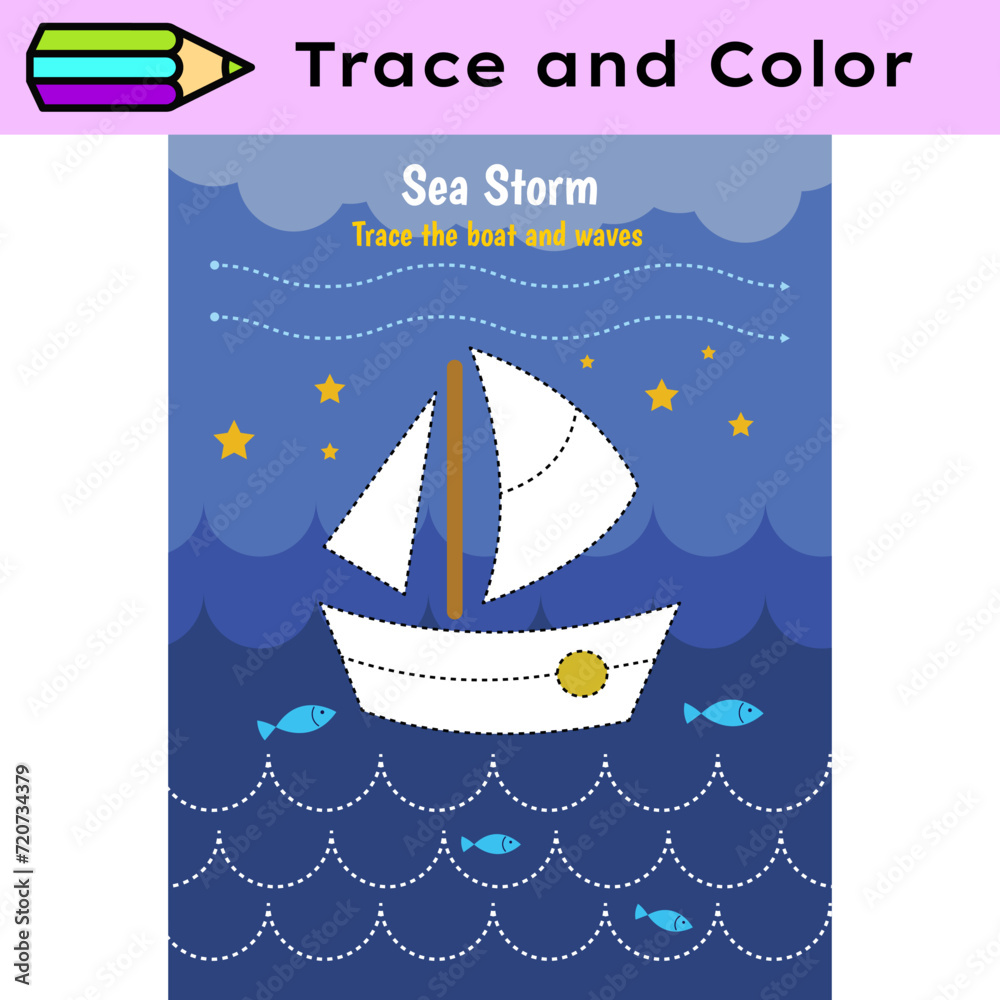
Rainy afternoons often bring an energetic scramble indoors, leaving adults searching for quiet, purposeful activities that channel a child’s bubbling focus. Watching a four-year-old grip a crayon with a tight, white-knuckled fist while carefully trying to navigate a curved line reveals just how much neurological coordination goes into early mark-making. That delicate process bridges the gap between raw imagination and controlled literacy readiness. To support this foundational growth, educators and occupational therapists frequently turn to themed practice sheets that make skill-building feel like play. The rainy day tracing worksheet offers an inviting entryway into pencil control, merging seasonal wonder with essential pre-writing strokes.
💡 Educational Key Takeaways:
- Core Skill: Structured Rainy Day Tracing Worksheet focused on developing pencil grip, stroke control, and early literacy/math confidence.
- Target Scope: Suited for homeschoolers, preschool, kindergarten, and elementary learners.
- Best Recommendation: Practice 10–15 minutes daily with ergonomic writing tools to reinforce muscle memory without hand fatigue.
What This Worksheet Covers
Deliberately designed strokes form the backbone of this printable resource, guiding children through raindrops, swirling puddles, and looping umbrella handles. Children repeatedly encounter vertical drops, gentle arcs, and closed circles—the fundamental shapes required for future handwriting success. According to the National Association for the Education of Young Children, young learners thrive when art and literacy intersect through hands-on developmental materials. Rather than demanding rigid drills, the weather-inspired motifs encourage continuous hand movements that build stamina in tiny finger muscles.
Key Learning Outcomes
Mastering these visual-motor pathways directly impacts how children eventually form letters and numbers. Smooth hand-eye coordination allows pencils to glide across paper with steady pressure and directional awareness. That is precisely what this resource addresses by breaking complex writing motions into manageable, engaging segments. Children learn to track lines from top to bottom and left to right, unconsciously reinforcing the directional flow of reading and writing. Exploring additional resources within Seasonal and Fun Themes keeps enthusiasm high as children transition between different weather patterns and holiday motifs.
How to Use This Worksheet
Preparation involves little more than a printer, sturdy paper, and a collection of colorful markers, crayons, or pencils. Begin by sitting alongside the child to observe their natural pencil grasp without immediately correcting every awkward finger placement. Point out the friendly cloud graphics at the top of the page and trace the descending raindrops with a finger before letting pencil meet paper. Shifting from tactile tracing to actual writing solidifies the brain-hand connection required for lasting motor memory.
Practical Tips for Parents and Teachers
Resistance to writing worksheets often melts away when adults introduce multisensory elements into the printing session. Placing the sheet inside a clear dry-erase pocket allows children to trace with markers, wipe away stray marks, and try again without frustration. Cutting the page into strips can also reduce visual overwhelm for children who struggle with whole-page layouts. For continuous skill expansion, integrating tools from Fine Motor and Pre-Writing Skills ensures children develop the core muscle tone necessary for effortless writing endurance.
Age-Appropriate Recommendations
Developmental readiness dictates how children interact with tracing activities, spanning ages two through eight with distinct milestones. Younger toddlers benefit from thick crayons and shorter line segments that match the CDC developmental milestones for early motor control. Kindergarten and early elementary students can tackle intricate, connected line pathways that demand sustained visual attention and fine-tuned muscle modulation. Aligning these expectations with the Common Core ELA standard CCSS.ELA-LITERACY.L.K.1.A ensures that physical writing practice simultaneously supports foundational language and communication goals.
According to the American Occupational Therapy Association, fine motor proficiency involving tool use and pencil control serves as a primary predictor of academic success in early elementary school. — American Occupational Therapy Association
Frequently Asked Questions
Explore More Free Printable Tracing Worksheets
Building a robust repertoire of pre-writing tools requires variety to keep young learners motivated week after week. Diversifying practice materials prevents burnout while targeting specific grip patterns and stroke formations. Educators can discover countless complementary resources by browsing through Shape and Line Tracing collections. Additional alphabet practice is always available within Alphabet and Number Tracing to seamlessly bridge seasonal themes into formal literacy instruction.
Download a free rainy day tracing worksheet to build fine motor skills, pencil grip, and pre-writing readiness for young children ages 2 to 8.
💬 Frequently Asked Questions
Developmental Milestone & Activity Table
| Development Stage | Recommended Daily Duration | Primary Learning Objective |
|---|---|---|
| Preschool & Pre-K | 10 – 15 Minutes | Pencil grip development & basic pre-stroke lines |
| Kindergarten | 15 – 20 Minutes | Letter/number formation & spatial line awareness |
| Early Elementary (Grade 1–2) | 20 – 30 Minutes | Fluency, sentence construction & neatness |