Introduction
Pencil in hand, tongue slightly between the teeth, a young learner bears down on a sheet of paper. Every early childhood educator and occupational therapist recognizes this intense moment of physical concentration. Mastering the mechanics of writing begins long before formal spelling or sentence composition takes root. Fine motor strength, visual-motor integration, and spatial awareness form the bedrock of future literacy. Purposeful graphic practice helps bridge the gap between gross motor play and precise pencil control. That is exactly what the heart tracing preschool resource addresses through engaging, developmentally appropriate visual pathways. Explore more in our Shape and Line Tracing collection.
💡 Educational Key Takeaways:
- Core Skill: Structured Heart Tracing Preschool focused on developing pencil grip, stroke control, and early literacy/math confidence.
- Target Scope: Suited for homeschoolers, preschool, kindergarten, and elementary learners.
- Best Recommendation: Practice 10–15 minutes daily with ergonomic writing tools to reinforce muscle memory without hand fatigue.
What This Worksheet Covers
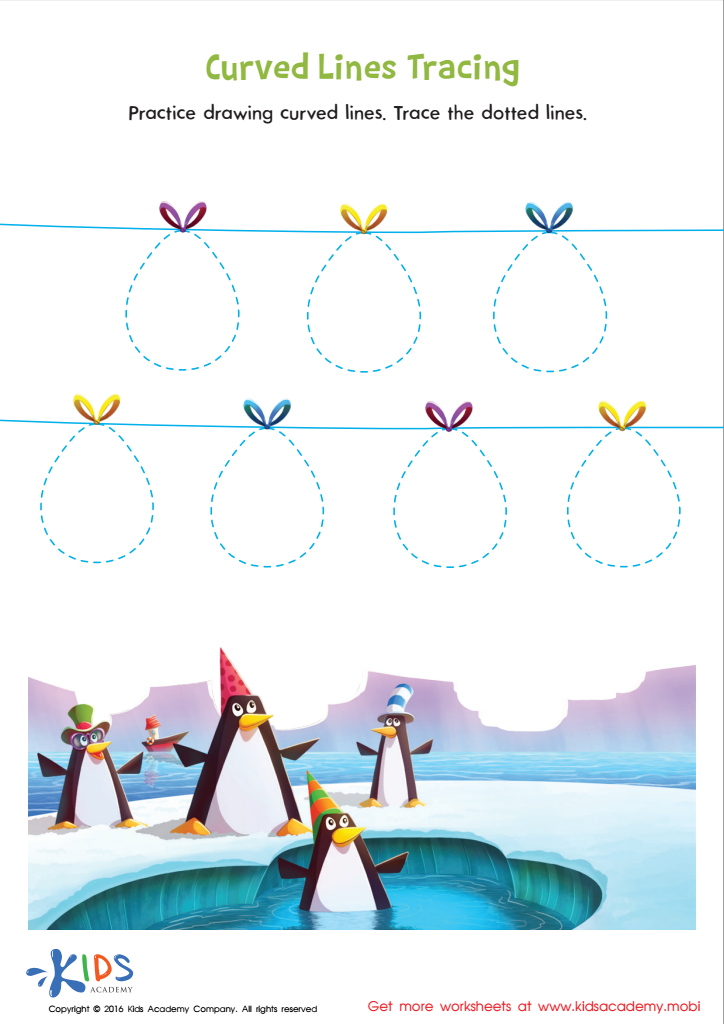
Curving lines present a distinct biomechanical challenge for small hands. Straight lines and vertical strokes come easily at first, but smooth arcs require coordinated wrist rotation and finger adjustments. The heart tracing template specifically targets these complex curves, offering dotted paths that guide the hand through continuous directional changes. Children naturally encounter circular and curved motions during early artistic expression, yet structuring those motions inside a defined boundary refines executive function and control.
Key Learning Outcomes
Targeted tracing exercises build foundational skills necessary for lifelong academic success. Hand-eye coordination improves as eyes track the dotted lines ahead of the pencil tip. Crossing the body’s midline occurs naturally when navigating the symmetrical lobes of a heart shape, which strengthens bilateral integration. According to the American Occupational Therapy Association, foundational fine motor tasks directly support classroom engagement and academic independence by fostering manipulative dexterity. Furthermore, pencil grasp patterns stabilize as children repeatedly regulate downward pressure to keep the line continuous.
How to Use This Worksheet
Preparation matters just as much as execution when introducing foundational pencil tasks. Printing the sheet on sturdy cardstock prevents curling and tearing under heavy-handed pressure. It sounds simple, and that’s the point, yet surface texture dramatically alters sensory feedback. Slipping the printed sheet inside a heavy-duty plastic sleeve transforms the paper into a reusable dry-erase board. Children can trace, wipe, and retry without fear of permanent mistakes, which lowers anxiety and encourages experimentation.
Practical Tips for Parents and Teachers
Adults often rush children toward standard tripod grasps before intrinsic hand muscles are ready. Shortening standard crayons or utilizing broken chalk encourages a natural fingertip pinch instead of a heavy fist grasp. Educators frequently observe children rotating their whole page while drawing curves; encourage them to pivot the non-dominant hand instead to hold the paper steady. Tracing should feel playful rather than punitive. Incorporating sensory elements like tracing over the printed lines with tactile glue or yarn before picking up a pencil can profoundly enhance spatial memory.
Age-Appropriate Recommendations
Developmental readiness dictates how young learners interact with pre-writing materials. According to the National Association for the Education of Young Children, early learning standards emphasize process over product, prioritizing physical engagement and joyful exploration above rigid perfection. Two-year-olds benefit most from large-scale tactile finger tracing or thick jumbo crayons. Three-to-four-year-olds successfully manage broader dotted lines with standard markers. By age five and six, children refine their precision, making this heart template ideal for independent practice within broader Shape and Line Tracing curricula.
According to the American Occupational Therapy Association, purposeful fine motor activities significantly enhance the neural pathways required for bilateral coordination and academic self-regulation. — American Occupational Therapy Association (AOTA)
Frequently Asked Questions
Navigating early writing resources brings up common questions among educators and caregivers. The selected questions below address the most frequent inquiries regarding printing, skill progression, and developmental milestones.
Explore More Free Printable Tracing Worksheets
Expanding a child’s collection of motor skill exercises prevents boredom and targets different developmental domains. Rotating through various thematic sheets keeps engagement high while continually challenging visual-motor integration. Explore collections dedicated to Fine Motor and Pre-Writing Skills to build comprehensive muscle strength. For seasonal variety and holiday fun, check out Seasonal and Fun Themes, or help learners master foundational literacy and mathematics through Alphabet and Number Tracing templates.
Download a free heart tracing preschool worksheet designed by educators and occupational therapists to build fine motor strength, pencil control, and pre-writing skills.
💬 Frequently Asked Questions
Developmental Milestone & Activity Table
| Development Stage | Recommended Daily Duration | Primary Learning Objective |
|---|---|---|
| Preschool & Pre-K | 10 – 15 Minutes | Pencil grip development & basic pre-stroke lines |
| Kindergarten | 15 – 20 Minutes | Letter/number formation & spatial line awareness |
| Early Elementary (Grade 1–2) | 20 – 30 Minutes | Fluency, sentence construction & neatness |